
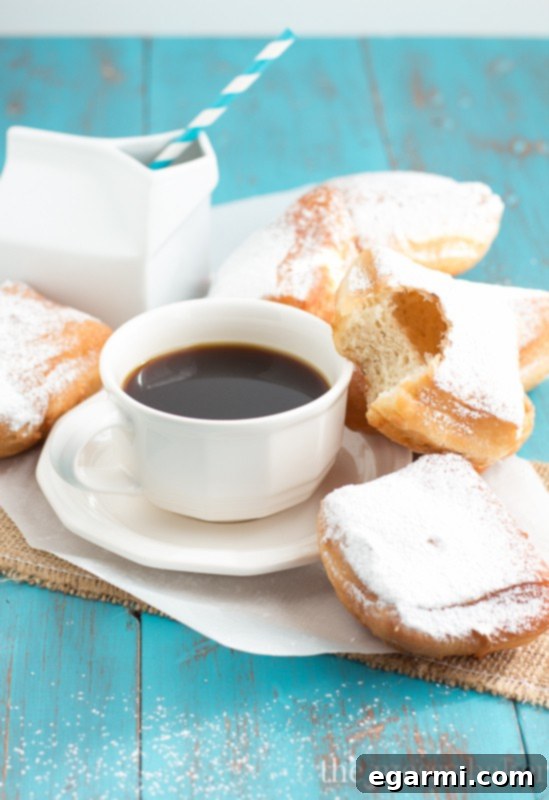
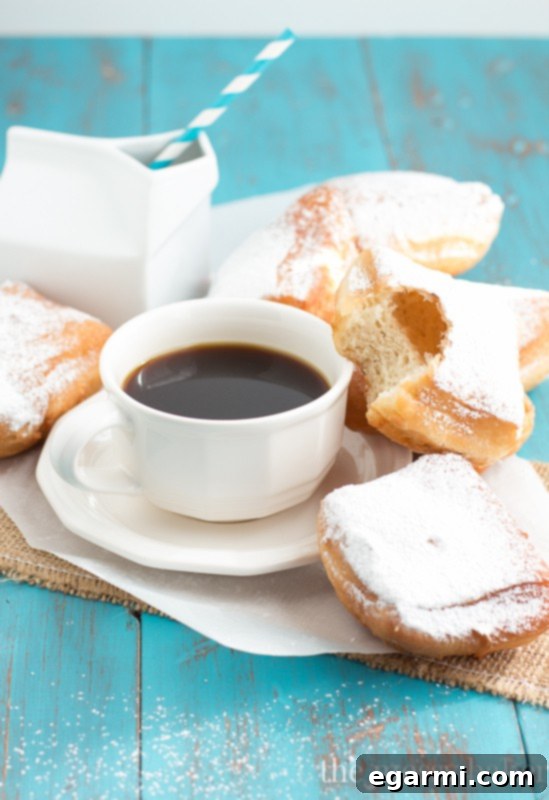
Discover the irresistible magic of homemade fluffy buttermilk beignets, delicately spiced with cinnamon and nutmeg, and generously blanketed under a delectable shower of powdered sugar. A true taste of New Orleans awaits!
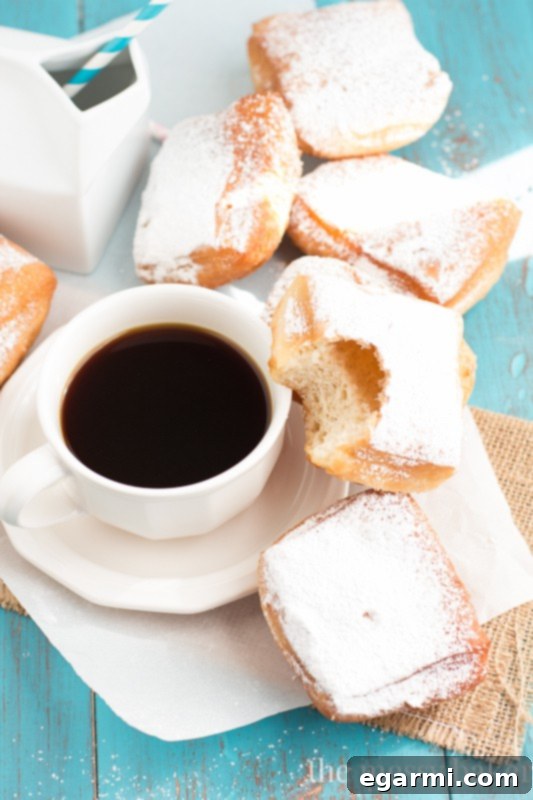
Ah, the beignet. A culinary masterpiece with a name that often trips up even the most enthusiastic foodies. It’s pronounced “ben-yay,” not “beg-net.” Trust me, making that linguistic misstep in the vibrant presence of true New Orleans beignet connoisseurs is a gaffe you won’t soon live down. It’s a playful warning, but one rooted in the deep affection and pride the city holds for its iconic fried dough. After all, when a pastry is as legendary as the beignet, its proper pronunciation becomes a mark of respect for its rich heritage.
It took me countless attempts and a hundred typos before I finally committed the correct spelling to memory – the “g” comes before the “n.” Sheesh, beignet, you certainly know how to keep a baker on their toes! Yet, every perfectly golden, sugar-dusted square makes the minor struggle with orthography entirely worth it. These delightful treats aren’t just food; they’re an experience, a piece of New Orleans culture you can savor.
This week, our #SundaySupper group is diving headfirst into the spirit of Fat Tuesday, though we’re affectionately dubbing it “Fat Sunday.” What exactly is Fat Tuesday? For many, myself included, it’s less about the historical or religious significance and more about embracing the sheer joy of indulgence. It’s an excuse to celebrate with abandon, to enjoy delicious food and camaraderie before the Lenten season begins. And if that means an endless supply of free-flowing beverages and mountains of powdered sugar-covered beignets, then sign me up! It’s the perfect occasion to revel in life’s sweet pleasures, especially with these glorious buttermilk beignets.
Have you ever had the pleasure of visiting “Nawlins,” as the locals affectionately call it? Am I even pronouncing that right? While I haven’t yet had the luxury of a trip to the Big Easy, it sits proudly atop my travel bucket list. My main motivation, of course, revolves around food – the vibrant culinary scene, the bustling street markets, and, naturally, the legendary beignets. Surprisingly, my husband, whom I lovingly call Squirrel, also dreams of visiting. His reasons, however, differ wildly from mine. Get ready for a chuckle:
Gator hunting. Yes, you read that correctly. I am married to a man whose lifelong dream is to “choot ’em” (that’s how he says it) gators for a living. I kid you not, this is a genuine aspiration. The moment he gets near a television, it’s a guarantee that “Swamp People” will materialise on the screen. If I hear him exclaim, “Choot ‘Em!” or “Get ’em in da boat!” one more time, I swear I’m going to pack his bags and ship him off to live permanently with the gators in a charming little floating house on the bayou.
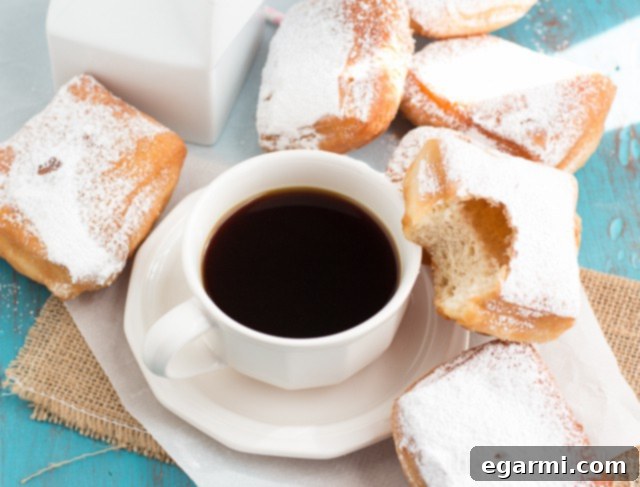
But enough about my husband’s bayou ambitions. Please, enjoy the rest of this delicious post while I go find a rock large enough to hide under. While Squirrel embarks on an airboat adventure, deep in the heart of the swamp, attempting to lure large, slimy reptiles, you’ll find me elsewhere. My ideal New Orleans fantasy involves a leisurely morning stroll to a quaint café on Bourbon Street, where I’ll sip a steaming cup of chicory coffee, delve into the pages of a captivating book, and, of course, indulge in a plate of freshly made beignets. It’s a stark contrast to gator hunting, but to each their own adventure!
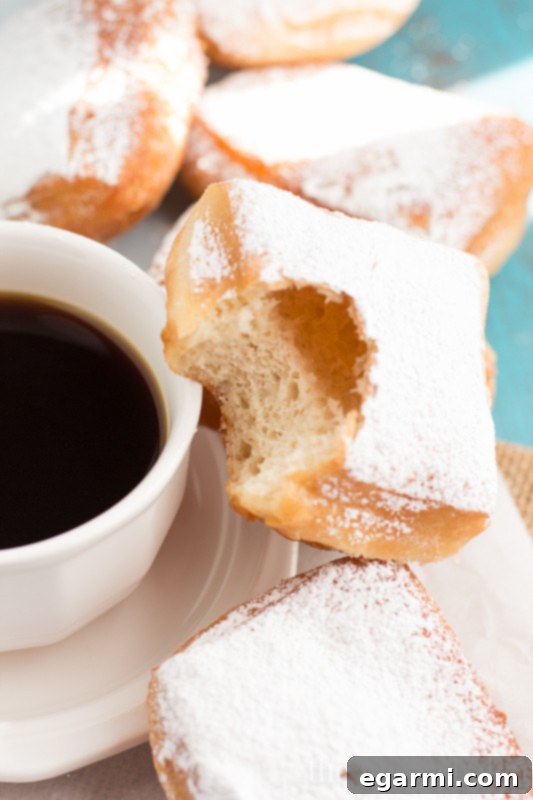
You might be surprised to learn this, but crafting authentic beignets at home is remarkably easy. Before last week, I confess I had only a vague notion of what a beignet truly was. It wasn’t until I embarked on some culinary research that I discovered these delightful pastries are essentially the Louisiana equivalent of a doughnut, albeit without the iconic hole in the center. In fact, they hold the prestigious title of Louisiana’s state doughnut, a testament to their cultural significance and widespread popularity throughout the region.
The legendary Cafe Du Monde, an absolute must-visit destination in Louisiana renowned for its beignets and distinctive chicory coffee, perfectly encapsulates their essence. They describe beignets as “a square piece of dough fried in vegetable oil and lavishly covered with powdered sugar.” This simple yet elegant definition belies the complex joy and comforting warmth each bite delivers. Unlike regular doughnuts, beignets are traditionally served hot, ensuring a melt-in-your-mouth experience as the powdered sugar dissolves slightly into the warm, fluffy dough. They represent a unique culinary tradition, distinct from other fried dough treats around the world, making them a true icon of Southern comfort food.
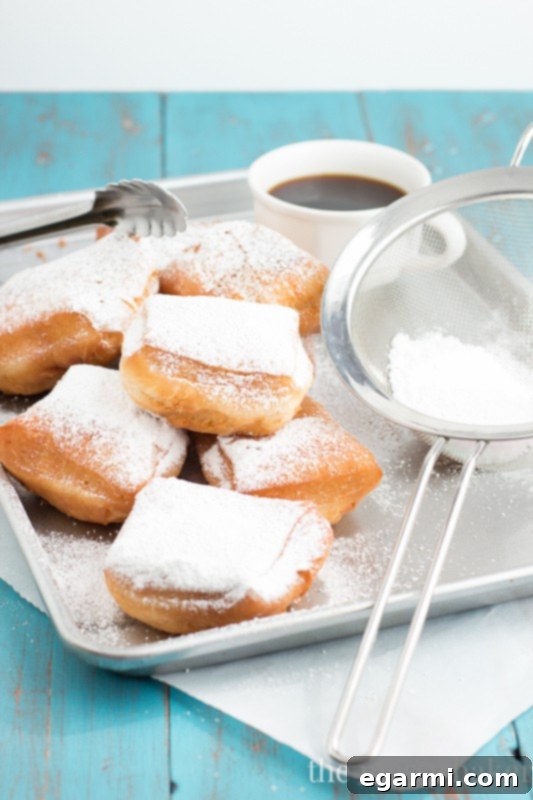
For this particular recipe, I chose to incorporate buttermilk, and for good reason. The subtle tanginess that buttermilk imparts to the soft, yeasty dough is simply divine, elevating the flavor profile beyond what plain milk could achieve. A touch of granulated sugar sweetens the dough just enough, creating a harmonious balance that isn’t overly saccharine. To truly capture that classic New Orleans warmth, I’ve infused the dough with a delicate hint of ground cinnamon and nutmeg, adding a layer of inviting spice that complements the richness of the fried pastry. These thoughtful additions transform a simple fried dough into an extraordinary culinary experience.
When it came to mixing the dough, my trusty stand mixer, fitted with a dough hook, made quick work of the process, ensuring a perfectly smooth and elastic dough. However, if you don’t own a stand mixer, fret not! A sturdy wooden spoon and your own two hands will work just as effectively. Kneading by hand can be a wonderfully therapeutic experience, connecting you more intimately with the ingredients and the craft of baking. Don’t be afraid to get a little flour on your hands – it’s all part of the fun!
To expedite the rising process – because let’s be honest, who wants to wait longer for delicious beignets? – I opted for Red Star Platinum yeast. My personal theory regarding doughnuts, and indeed beignets, is quite simple: the quicker the dough rises, the sooner I get to devour those warm, sugary delights. I believe it’s a perfectly sound theory, and one that has consistently led to delicious results. This fast-acting yeast ensures your beignets are ready to be fried and enjoyed in record time, making them a feasible treat even on a busy weekend.
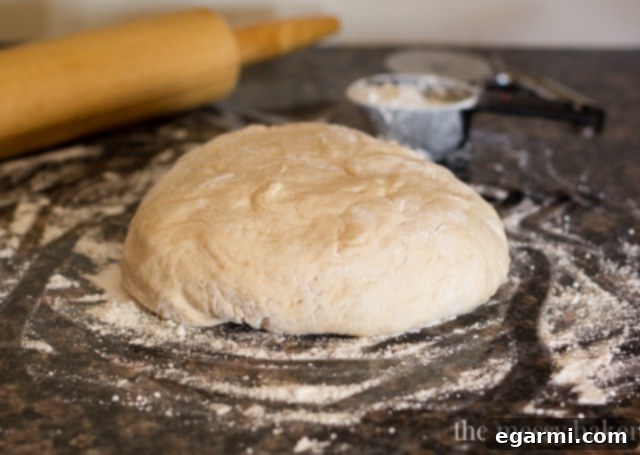
Once your dough has majestically risen to double its original size, it’s time for the next exciting step. Gently turn the dough out onto a lightly floured surface. With a rolling pin, carefully roll the dough into a uniform rectangle, aiming for a thickness of approximately 1/2-inch. This consistent thickness is key to ensuring your beignets cook evenly and achieve that perfect fluffy interior.
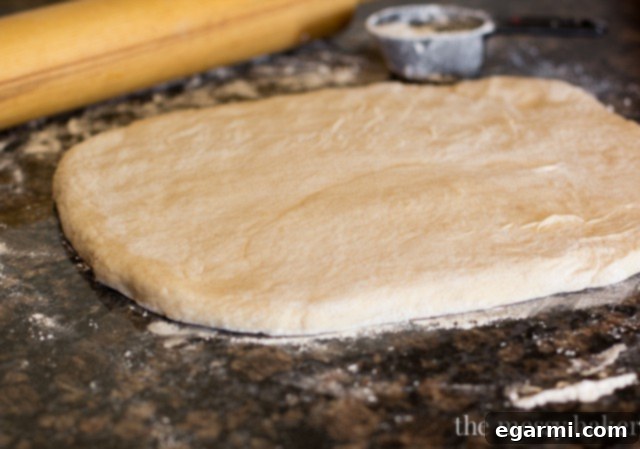
Next, carefully trim the edges of your rolled-out dough rectangle to create clean, straight lines. You can use a floured knife for this task, but if you’re looking for efficiency and precision, I highly recommend using a pizza cutter. It’s my favorite tool for this job, gliding effortlessly through the dough and ensuring perfectly straight cuts, which contributes to those classic square beignet shapes.
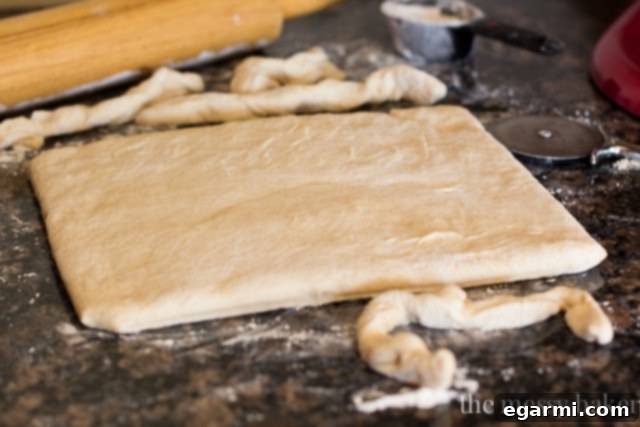
Once the edges are neatly trimmed, proceed to cut the dough into large, uniform squares. The traditional size is usually around 3×3 inches, but you can adjust this to your preference. Remember, the beauty of homemade beignets is that slight imperfections only add to their charm and rustic appeal. Each square is a promise of a future golden, fluffy delight.
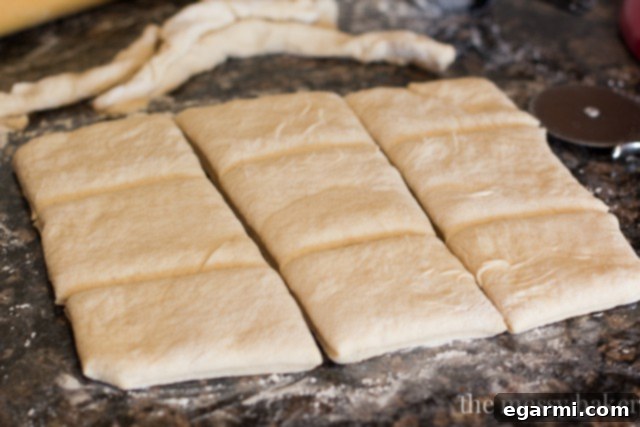
Now comes the thrilling part: frying! Heat 1 1/2 inches of canola oil in a sturdy cast iron pan or a deep fryer to a precise 350 degrees F (175 degrees C). Maintaining the correct oil temperature is crucial for perfect beignets – too cool, and they’ll be greasy; too hot, and they’ll brown too quickly on the outside while remaining raw in the center. A kitchen thermometer is your best friend here, ensuring consistent results every time.
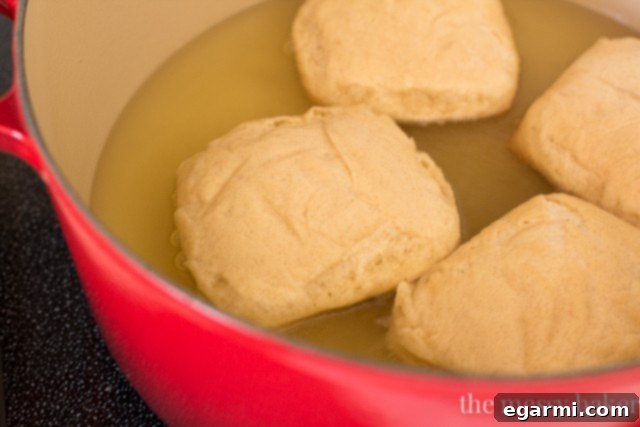
Gently lower a few squares of dough into the hot oil, being careful not to overcrowd the pan. Fry the beignets for approximately 2 minutes on each side, or until they achieve a beautiful golden-brown color and puff up delightfully. Use a slotted spoon or a pair of metal tongs to carefully flip them, ensuring even cooking. Watch them closely, as they cook quite quickly!
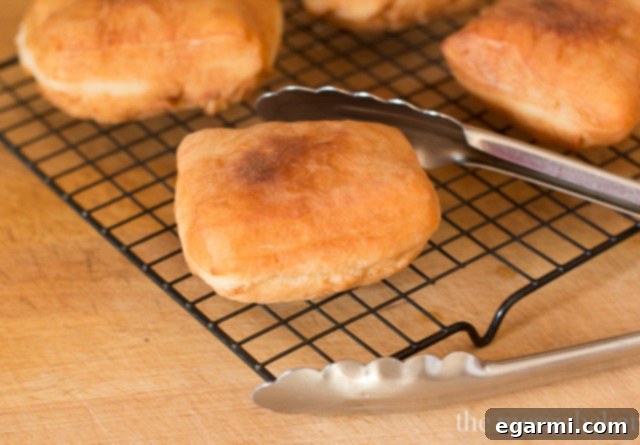
Once fried to golden perfection, transfer the beignets to a cooling rack placed over a sheet of aluminum foil or paper towels. This allows any excess oil to drain away, preventing them from becoming soggy. Allow them to cool just slightly – they’re best served warm, but not so hot that the powdered sugar immediately melts into oblivion. A few moments of rest will ensure the sugar clings perfectly.
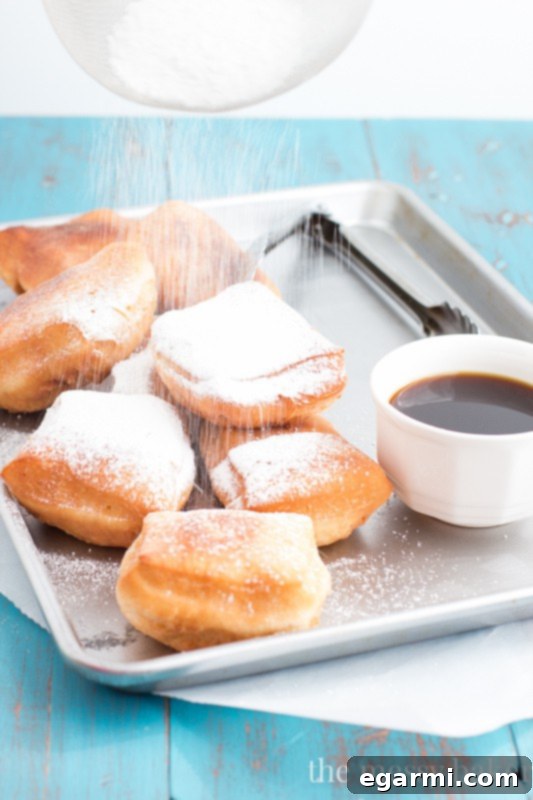
And now, for the grand finale – make it rain! Seriously, don’t be shy with the powdered sugar. The more, the better! Pile it high, let it drift like fresh snow over every warm, inviting surface of the beignets. A generous dusting is not just traditional; it’s essential for that iconic New Orleans experience. This final flourish transforms them into true works of edible art, ready to be devoured.
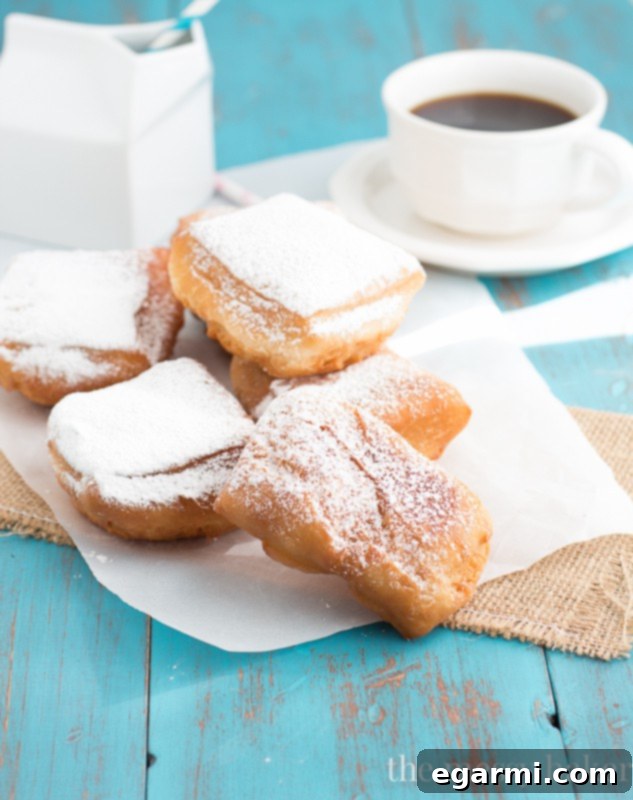
I must confess, I got so utterly excited by these beignets that my self-control went right out the window. I devoured one immediately after they finished frying, still warm and pillowy. Another disappeared during their “glamour shots” – a necessary sacrifice for quality control, of course! And then, after dinner, I couldn’t resist piling one high with a scoop of creamy vanilla ice cream. It was pure bliss.
Now, while I’ve yet to make that dream trip to New Orleans, meaning I can’t offer a direct comparison to the legendary beignets from Cafe Du Monde, I can confidently tell you one thing: these homemade buttermilk beignets are damn good. They are intensely yeasty, with that unmistakable rich, fermented aroma that makes you crave another bite. The buttermilk introduces a delicate tang, a bright counterpoint to the subtle sweetness. The hint of cinnamon and nutmeg adds a cozy, aromatic warmth, making them feel incredibly comforting.
Their texture is a revelation – wonderfully light and airy on the inside, almost marshmallowy, contrasting beautifully with the slightly crisp exterior from the frying. They are mildly sweet, allowing the nuanced flavors of the yeast and spices to shine through. After you finish one, you’ll find yourself irresistibly reaching for a second, then a third. They truly are that addictive, a testament to the simple perfection of fried dough done right. Prepare to fall in love with your own homemade taste of Louisiana!

Buttermilk Beignets
Fluffy buttermilk beignets with a hint of cinnamon and nutmeg showered with mounds of powdered sugar – a delightful taste of New Orleans at home.
Yield: 9 beignets
Total Time: 2 hours 4 minutes
Prep Time: 2 hours
Cook Time: 4 minutes
Ingredients:
- 1 packet (7g or 2 1/4 teaspoons) quick-rise yeast
- 3/4 cup hot water (110 degrees F / 43 degrees C)
- 2 and 1/2 tablespoons granulated sugar, plus more for proofing yeast
- 3/4 teaspoon kosher salt
- 1/2 teaspoon ground cinnamon
- 1/4 teaspoon ground nutmeg
- 1 large egg, at room temperature
- 1/2 cup buttermilk, at room temperature
- 3 1/2 cups all-purpose flour, divided
- 2 ounces (approx. 4 tablespoons) unsalted butter, cut into cubes and softened
- Canola oil for frying (approx. 4-6 cups)
- Powdered sugar for dusting (generous amount)
Directions:
- In the bowl of a stand mixer fitted with the dough hook attachment, combine the hot water, yeast, and 1/2 tablespoon of the granulated sugar. Give the mixture a gentle stir to ensure all ingredients are moistened. Allow this mixture to rest undisturbed for 5 minutes. You’ll know the yeast is active and ready when a visible layer of foamy bubbles forms at the top of the mixture.
- To the yeast mixture, add the remaining 2 tablespoons of granulated sugar, kosher salt, ground cinnamon, ground nutmeg, the large egg, and the buttermilk. Mix on medium speed until all ingredients are well combined. Next, add the softened butter, mixing until it’s mostly incorporated. Don’t worry if a few tiny bits of butter are still visible; they will fully incorporate during the kneading process.
- With the mixer running on low speed, slowly add 3 1/4 cups of the all-purpose flour, one scoop at a time. Continue mixing until the dough comes together and begins to pull away cleanly from the sides of the bowl, forming a cohesive mass.
- Turn the dough out onto a lightly floured surface. Knead the dough by hand, gradually incorporating the remaining 1/4 cup of flour, until the dough becomes smooth, elastic, and no longer sticky, which typically takes about 5 to 7 minutes of steady kneading.
- Form the kneaded dough into a neat ball and place it in a large, lightly oiled bowl, turning the dough once to ensure it’s coated with oil on all sides. Cover the bowl loosely with a piece of plastic wrap or a clean, thin dish towel. Place the bowl in a warm, draft-free area and allow the dough to rise until it has doubled in its original size. If you’re using quick-rise yeast, this process typically takes about 1 1/2 hours. If you’ve opted for active dry yeast, expect the rise time to be closer to 2 to 2 1/2 hours.
- Once risen, gently turn the dough out onto a lightly floured surface. Gently pat the dough down to release the air and form a thick disk. Lightly dust the top of the dough and your rolling pin with flour to prevent sticking.
- Prepare your frying station: Heat 1 1/2 inches of canola oil in a heavy-bottomed cast iron pan, Dutch oven, or deep fryer to a precise temperature of 350 degrees F (175 degrees C). Use a candy or deep-fry thermometer to monitor the oil temperature accurately.
- Gently roll the dough out evenly to form a 1/2-inch thick rectangle. Using a pizza cutter or a sharp, floured knife, trim the edges of the dough to create a semi-uniform square or rectangular shape. Then, cut the dough into individual 3 x 3-inch squares.
- Place a wire cooling rack over a large piece of aluminum foil or several layers of paper towels near your frying station. This will be used to drain the fried beignets.
- Carefully place a few squares of dough into the hot oil, ensuring not to overcrowd the pan. Fry the beignets until they are puffed up and golden brown on both sides, which typically takes about 1 to 2 minutes per side. The internal temperature of a properly cooked beignet should reach 200-205°F (93-96°C) if you want to be precise.
- Using a slotted spoon or a pair of metal tongs, transfer the golden beignets from the hot oil to the prepared cooling rack. Allow them to cool slightly for just a minute or two – they are best served warm. Immediately before serving, generously shower the beignets with an abundance of powdered sugar. Serve and enjoy immediately for the best experience.
For the ultimate enjoyment, beignets are best savored directly after they’re finished frying and generously dusted with powdered sugar. Their light, airy texture and warm, yeasty flavor are at their peak freshness within minutes of coming out of the oil.
Adapted from Local Milk.
All images and text ©One Sweet Mess.
Whipping up one of my recipes? I wanna know about it! Snap a photo and tag your post with #onesweetmess on Twitter or Instagram. Seeing your delicious creations come to life always makes my day!